The Hidden Ceiling of IoT Platforms Nobody Talks About
In the race to digitize infrastructure, many B2B IoT platforms celebrate early success, until scale
turns from an asset into a liability. It starts subtly: dashboards load slower, analytics lag behind live
data, DevOps costs creep up, and customer complaints about latency or data gaps begin to surface.
The platform that once felt cutting-edge suddenly starts to feel… brittle.
What most providers won’t admit, or simply don’t know yet, is that the majority of commercial IoT
platforms are built on architectural foundations that cannot scale past a certain point. And for
many, that ceiling arrives sooner than expected: between 2 and 5 million sensors.
The Illusion of Infinite Scale
Early-stage deployments are deceptively forgiving. A few hundred thousand sensors? No problem.
Some optimizations here, a new message broker there, maybe a database cluster upgrade, and it
keeps working. But what’s actually happening under the hood is vertical scaling, not true
architectural elasticity.
Every fix is a temporary patch on a fundamentally monolithic structure, especially for platforms
built on time-series databases, relational storage backends, and chained message queues. These
systems simulate scale rather than support it. When concurrency increases, ingestion bottlenecks.
When data volume grows, query latency climbs. When uptime matters most, maintenance windows
get longer.
This isn’t just a tech problem, it’s a business risk.
What Happens After 3 Million Sensors?
For most platforms, that’s the inflection point. Processing throughput begins to degrade. Real-time
alerting becomes inconsistent. Teams throw more infrastructure at the problem, only to discover that
performance gains don’t linearly increase with cost. At this stage, the stack starts cannibalizing
engineering time. DevOps grows into a full department, not a supporting function. The architecture
is now a liability, and worse, the customers can feel it.
What follows is either a painful rewrite or a managed decline. Neither is attractive.
Why Most Teams Don’t See It Coming
The limitations are masked by short-term successes. A contract is landed. A new region comes
online. A client deploys an additional 200,000 meters. The system “holds.” Leadership sees no
issue, until internal tickets pile up, infrastructure costs surge, and clients start asking uncomfortable
questions about delays, replays, or gaps in data visibility.
Most providers mistake uptime for resilience and data storage for telemetry processing. The two are
not the same. Just because the platform is still online doesn’t mean it’s performing.
The Silent Saboteur: Platform Complexity
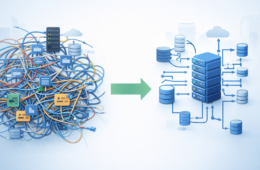
By the time most IoT companies realize the trap, they’ve built layer upon layer of tools, broker
queues, cold storage, batch pipelines, metrics aggregators, alerting hacks. The stack becomes so
complex that it takes more time to maintain than to improve. This is the invisible tax of “scaling”
the wrong way. It burns out engineers, bloats budgets, and slows innovation.
The hard truth? Your platform shouldn’t slow down as it grows. If it does, it was never designed
to scale, it was designed to function until it couldn’t anymore.
There’s a Better Way, But It Requires Letting Go
True scale doesn’t come from more engineers, more containers, or clever workarounds. It comes
from rethinking the problem: how to process massive volumes of telemetry in real time, with
zero architectural friction, under full legal compliance, and with predictable cost control.
This isn’t a theoretical goal. It’s already being done, quietly, by those who realized that platform
ownership shouldn’t be synonymous with infrastructure pain.
If your team is spending more time fighting the stack than delivering value to your clients, it’s time
to ask the real question:
What if you didn’t need a platform at all?
Contact us and ask us anything you like to find out more.
https://kronyx.io/
#kronyx, #nmesys
🔍 Summary / SEO Description / Social Preview
Most IoT platforms fail silently between 2–5 million sensors. Not because of traffic, but because of
hidden architectural ceilings. This article explores why growth kills fragile stacks, and what B2B
operators must recognize before scale becomes collapse.